Solar-Powered Outdoor Cameras: A Complete Guide
Sustainable, off-grid surveillance solutions for challenging outdoor environments.
Overcoming Power Constraints
The single greatest limitation of wireless security cameras has always been battery life. Depending on traffic and motion events, a battery-powered camera might require recharging every few weeks. In outdoor scenarios—where cameras are often mounted high under eaves or on distant fence posts—regularly climbing a ladder to swap batteries is a significant logistical hurdle. Solar-powered setups elegantly solve this problem, transforming temporary wire-free solutions into self-sustaining surveillance nodes.
How Solar Integration Works
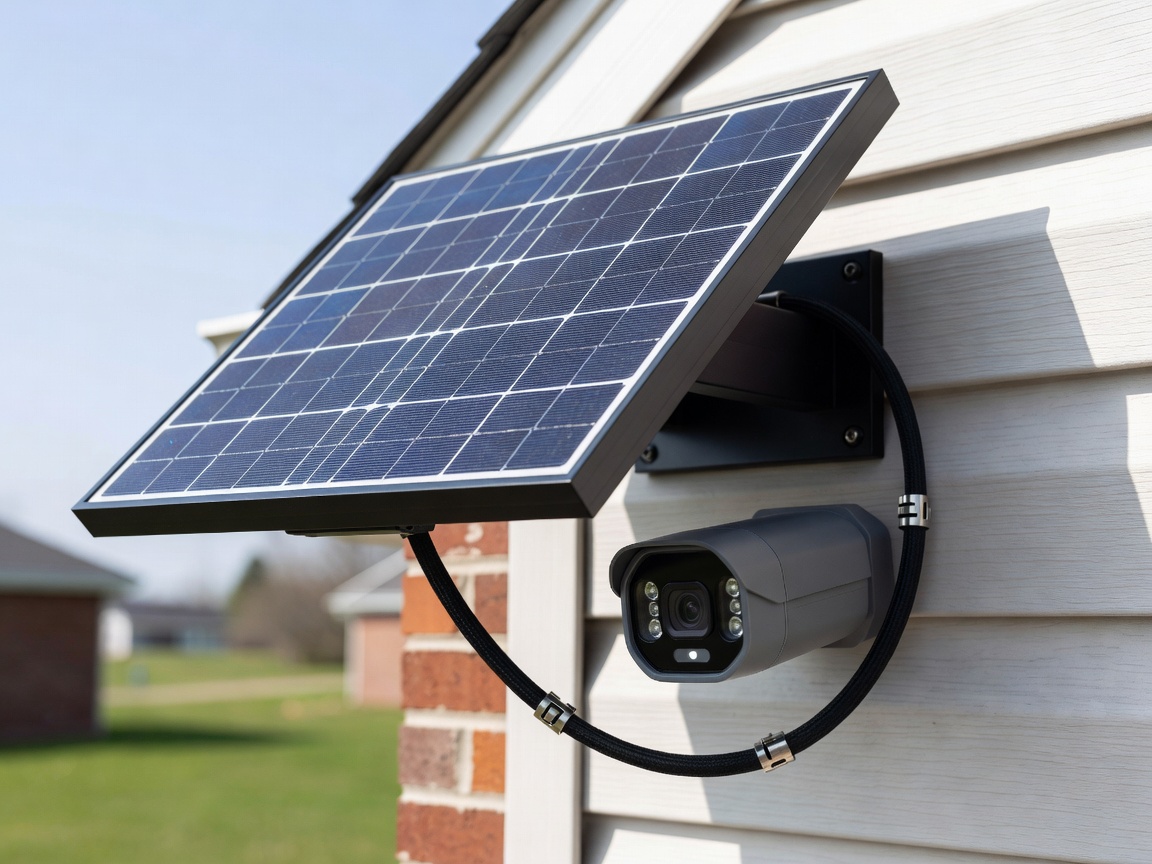
Solar security setups consist of a highly efficient, small-form-factor solar panel (typically between 3W and 6W) connected via a weatherproof cable to the camera's internal rechargeable battery (usually lithium-ion). The goal of the solar panel is not to run the camera directly in real-time, but rather to trickle-charge the battery during daylight hours.
As long as the panel receives adequate direct sunlight each day, it will generate enough power to offset the energy consumed by the camera overnight. This creates a perpetual energy cycle, effectively eliminating the need for manual recharging under normal weather conditions.
Positioning and Efficiency
The success of a solar-powered camera hinges entirely on placement. A common mistake during installation is pointing the solar panel in the same direction as the camera lens. These two components have different optical needs: the camera must face the area to be monitored, while the solar panel must face the sun's trajectory.
- Geographic Orientation: In the Northern Hemisphere, solar panels should be angled facing true South to capture maximum daily sunlight. In the Southern Hemisphere, they should face North.
- Optimal Angle: The tilt angle should roughly match your geographic latitude, though adjusting it slightly steeper in winter can help catch the lower sun and shed snow.
- Obstruction Clearance: Even partial shading from overhanging tree branches or roof eaves can drastically reduce a panel’s output.
Weather Resistance and Durability
Because solar cameras are designed for highly exposed, off-grid locations, their physical durability is paramount. Both the camera and the solar panel must carry robust Ingress Protection (IP) ratings. An IP65 rating ensures the device is dust-tight and protected against water jets from any angle, which is generally sufficient. However, an IP66 or IP67 rating provides superior defense against heavy storms and driving rain.
Temperature tolerance is another factor. Extreme cold can severely degrade lithium-ion battery performance and inhibit the battery's ability to accept a charge from the solar panel. High-end solar security systems often feature built-in thermal management to protect the battery cells during deep winter freezes.
Cellular (4G/LTE) Solar Cameras
For truly remote locations—like construction sites, farms, or hunting cabins—where neither power nor Wi-Fi is available, the ultimate solution is the 4G LTE solar camera. These devices combine a solar panel for power with a cellular SIM card for data transmission. While they require a monthly cellular data plan, they offer unparalleled flexibility, allowing users to monitor vast, off-grid properties from a smartphone anywhere in the world.