Wireless vs. Wired Security Systems
Evaluating reliability, installation complexity, and performance across different surveillance infrastructures.
The Core Architectural Difference
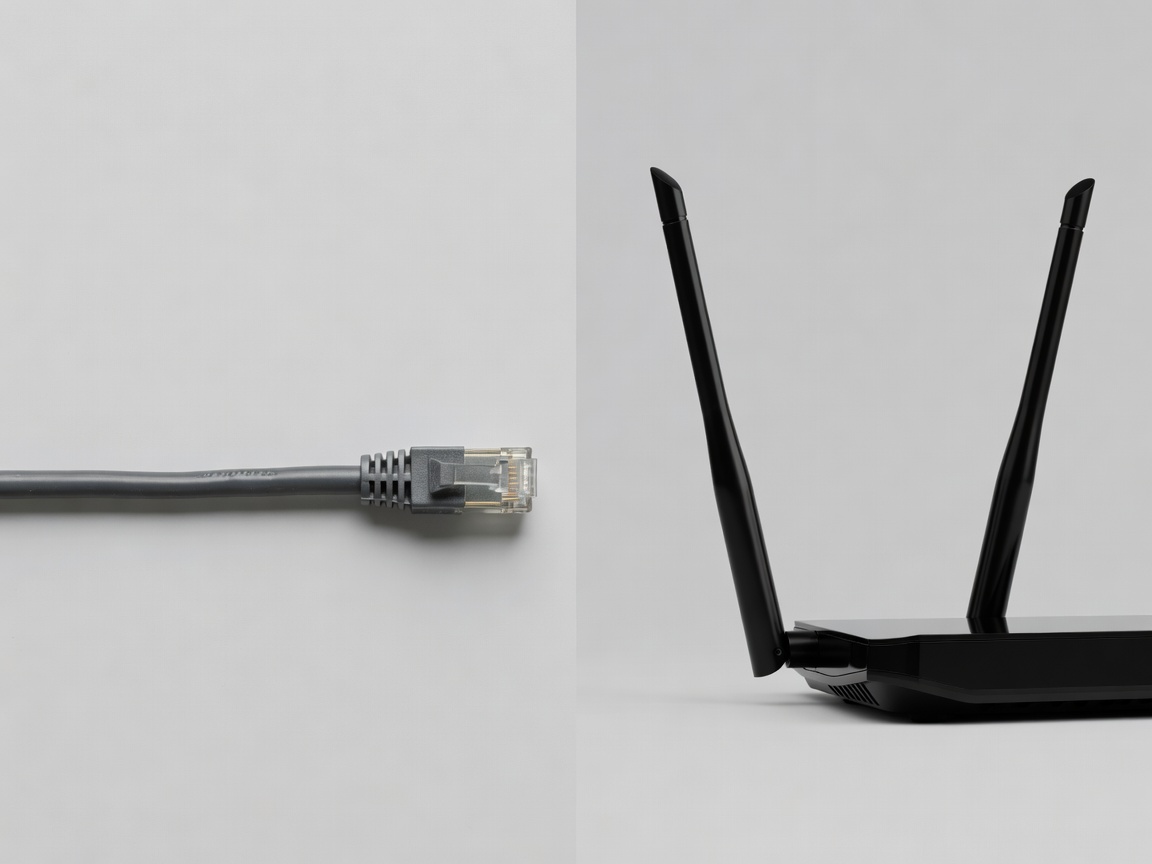
The decision between a wired and wireless outdoor security system fundamentally dictates how your system will operate, how it will be installed, and its long-term reliability. In the realm of outdoor security, "wireless" usually refers to data transmission via Wi-Fi (though it can also include battery-powered models that are 100% wire-free), while "wired" generally implies Power over Ethernet (PoE) or traditional coaxial cabling.
Both architectures have distinct advantages depending on the physical layout of the property and the user’s technical requirements.
Wired Systems: The PoE Standard
Power over Ethernet (PoE) has emerged as the gold standard for robust, professional-grade outdoor surveillance. In a PoE setup, a single Cat5e or Cat6 Ethernet cable runs from a Network Video Recorder (NVR) or a PoE switch directly to the camera. This single cable delivers both network connectivity and operating power.
Advantages of Wired Systems:
- Unmatched Reliability: Physical cables are immune to Wi-Fi interference, dropped signals, and password changes. The connection is stable 24/7.
- Continuous Recording: Because they are constantly powered, wired cameras can record 24/7 without concern for draining a battery.
- Higher Bandwidth: Gigabit Ethernet supports massive data throughput, making it ideal for multi-camera 4K setups without bogging down the local wireless network.
The primary drawback of a wired system is the installation complexity. Running Ethernet cables through attics, exterior walls, and soffits requires time, tools, and sometimes professional assistance.
Wireless and Wire-Free Systems
Wireless cameras connect to the local network via Wi-Fi but still require a plugged-in power source. "Wire-free" cameras take this a step further by operating on rechargeable batteries or solar panels, eliminating all physical connections.
Advantages of Wireless/Wire-Free Systems:
- Rapid Deployment: Installation takes minutes rather than hours. Cameras can be mounted in trees, on fences, or on outbuildings easily.
- Renter-Friendly: Because they do not require drilling through walls for cable runs, wire-free systems are ideal for temporary installations or rental properties.
- Flexibility: If a camera angle isn't providing the right coverage, moving a wireless camera is incredibly simple.
However, wireless models come with inherent limitations. Battery-powered cameras typically rely on passive infrared (PIR) motion sensors to wake up and record, meaning they cannot record continuously (24/7). There is also a slight delay between motion detection and the start of recording, which can sometimes result in missing the first few seconds of an event. Additionally, they require a strong, stable Wi-Fi signal at the exterior installation point, which often necessitates outdoor Wi-Fi extenders or mesh network nodes.
Making the Right Choice
If you are a homeowner looking for a permanent, set-and-forget perimeter defense that records non-stop at ultra-high resolutions, a wired PoE system is invariably the superior choice. The upfront effort of running cables pays dividends in long-term stability and performance.
Conversely, if you need to monitor detached structures where running a cable is impossible, or if you prefer a simple, DIY installation that can be completed in an afternoon, modern wireless and battery-powered systems offer a highly capable and flexible alternative.